( Case study · 02 / 05 )
Kiphar
Starting a community app with a friend and taking it from first sketch to shipped.
- Role
- Cofounder · design & build
- Type
- Mobile app
- Year
- Since 2023
- Tools
- Product strategy, Figma, Design system, Prototyping, Frontend build
( Overview )
Nigeria is packed. Its population density is roughly seven times that of the United States. If the US were that dense, it would hold 2.3 billion people. Gated communities there have a real problem: letting residents and visitors in safely and quickly when traffic is heavy. The old way, physical gate passes and phone calls to the security post, is full of errors and bottlenecks.
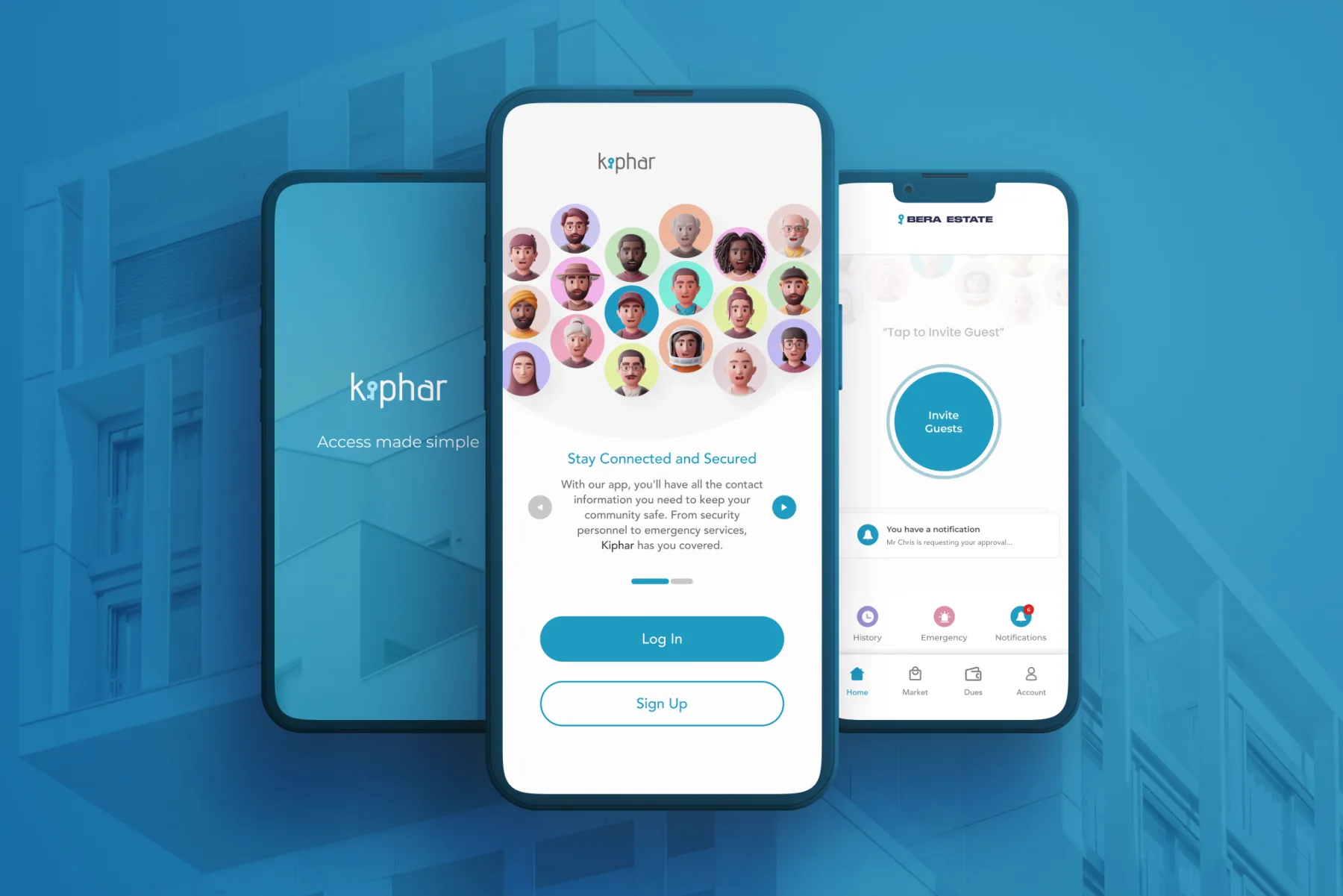
Kiphar is the app a friend and I built to fix that. Easy visitor access, a direct line to security, and emergency help, all in one place, replacing the WhatsApp groups and paper logbooks most estates still run on.
It's also where I stopped handing designs over a wall. I own Kiphar end to end: the research, the design system, every screen, and the build.
( Chapter 01 / 03 )
Research
The goal: really understand what residents and visitors in gated communities need, and what drives them up the wall.
Method
- 01My partner and I ran interviews, in person and remote, with all kinds of potential users: residents, security staff, and property managers
- 02We asked open questions to understand how they felt about the access systems they already used
What we learned
- 01Residents hate the long waits at the gate during rush hours
- 02Security staff struggle to manage and check physical gate passes
- 03People want convenience, safety, and instant notifications
The competition
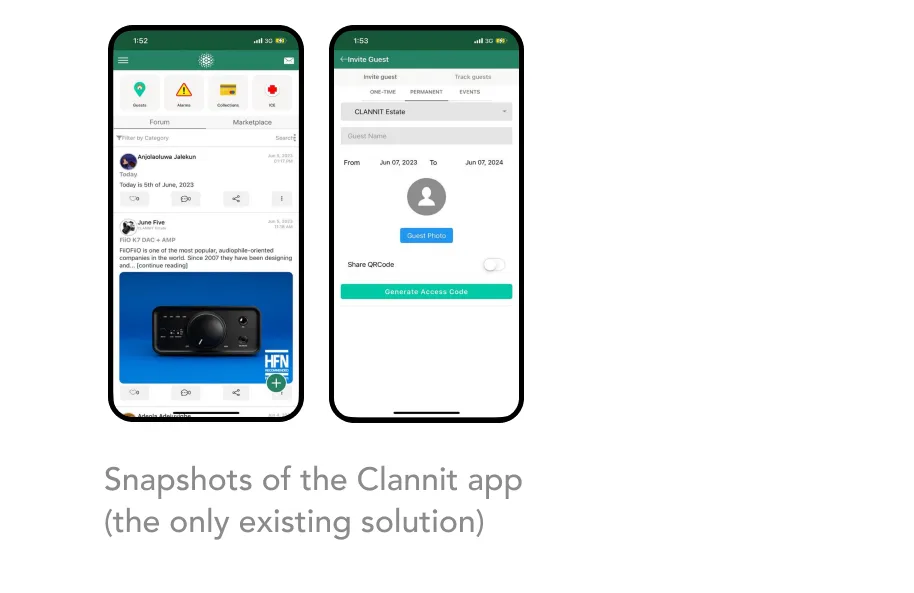
There was exactly one other product out there, and it was clunky with no real time communication. Its users complained constantly about access codes not working. The gap was obvious: people wanted something complete and easy to use.
( Chapter 02 / 03 )
Designing Kiphar
Version one shipped with two core features: creating and checking access codes, and emergencies.
Onboarding
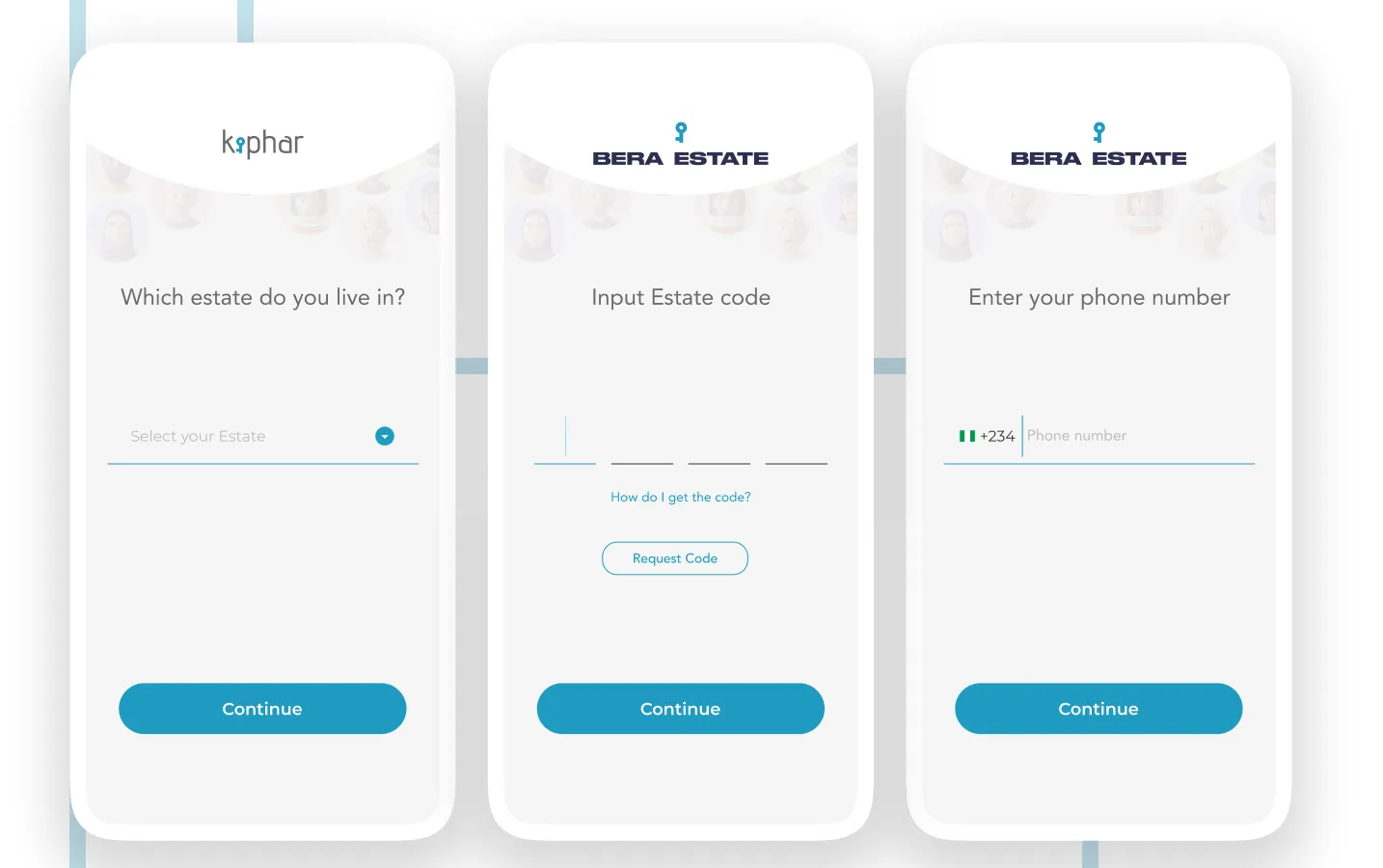
Onboarding starts with the estate. You create an account, link your home to a specific community with an estate code, and unlock the app once you're verified. From there it wears your estate's branding, so people in Bera Estate see Bera Estate.
Creating codes
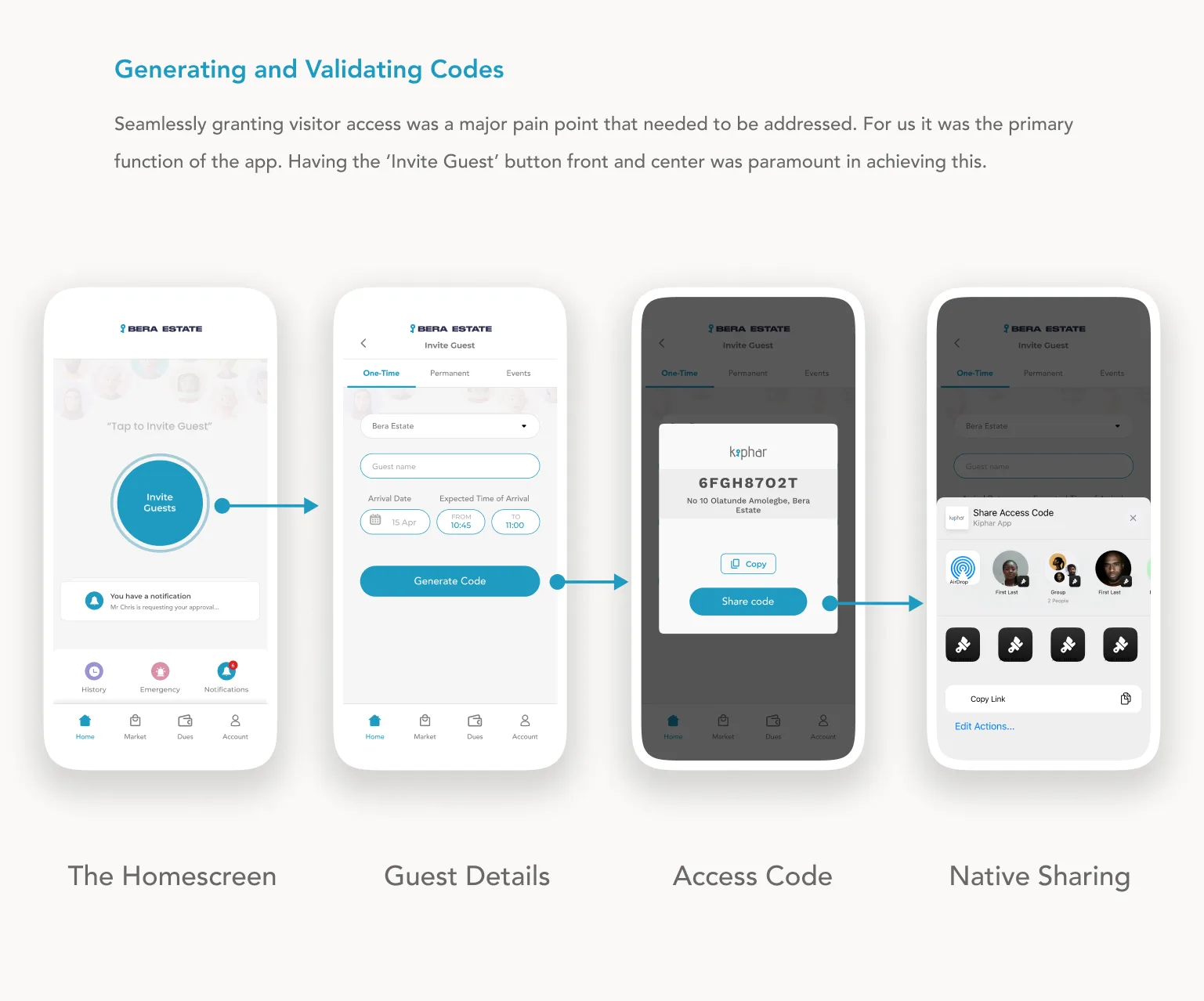
Letting visitors in easily was the biggest pain point, and it's really the heart of the app. The “Invite Guest” button sits front and center on the home screen, and once you generate a code it's one tap of the share sheet to send it to your guest.
Checking codes
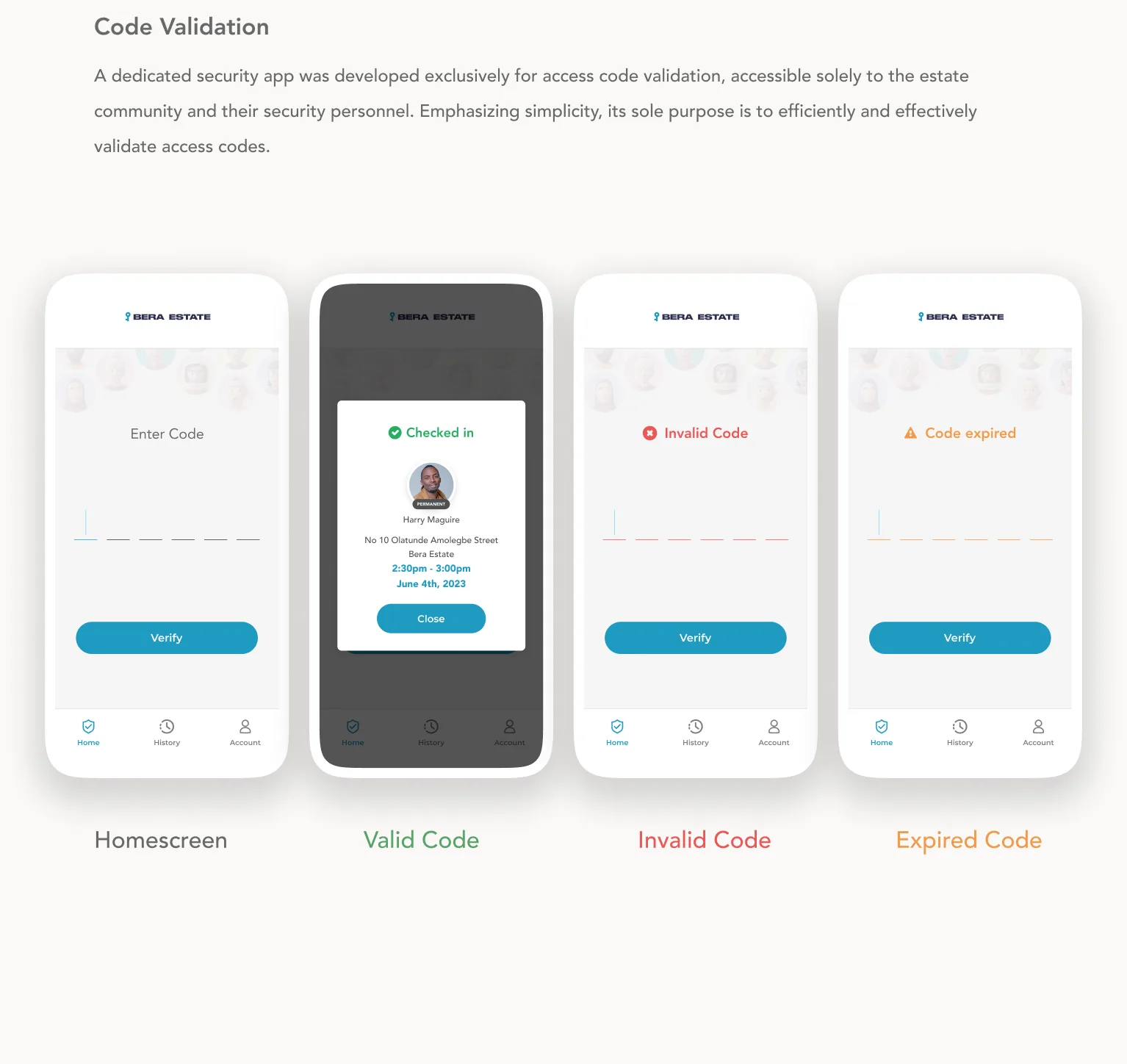
We built a separate app just for security, available only to the estate and its guards. It does one thing: check access codes, fast. The whole thing is designed to be read at a glance at a busy gate.
Emergencies
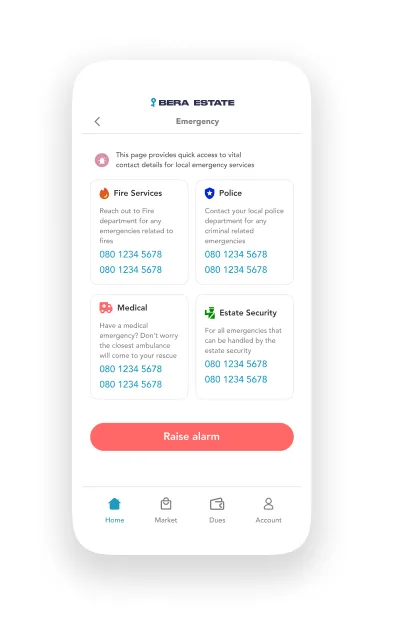
The emergency page puts the essentials one tap away. Raise an alarm, reach security, and call fire, police, medical, or estate lines. Quick help and peace of mind when it counts.
( Chapter 03 / 03 )
Wearing every hat
At a small startup, the design role doesn't stop at the product.
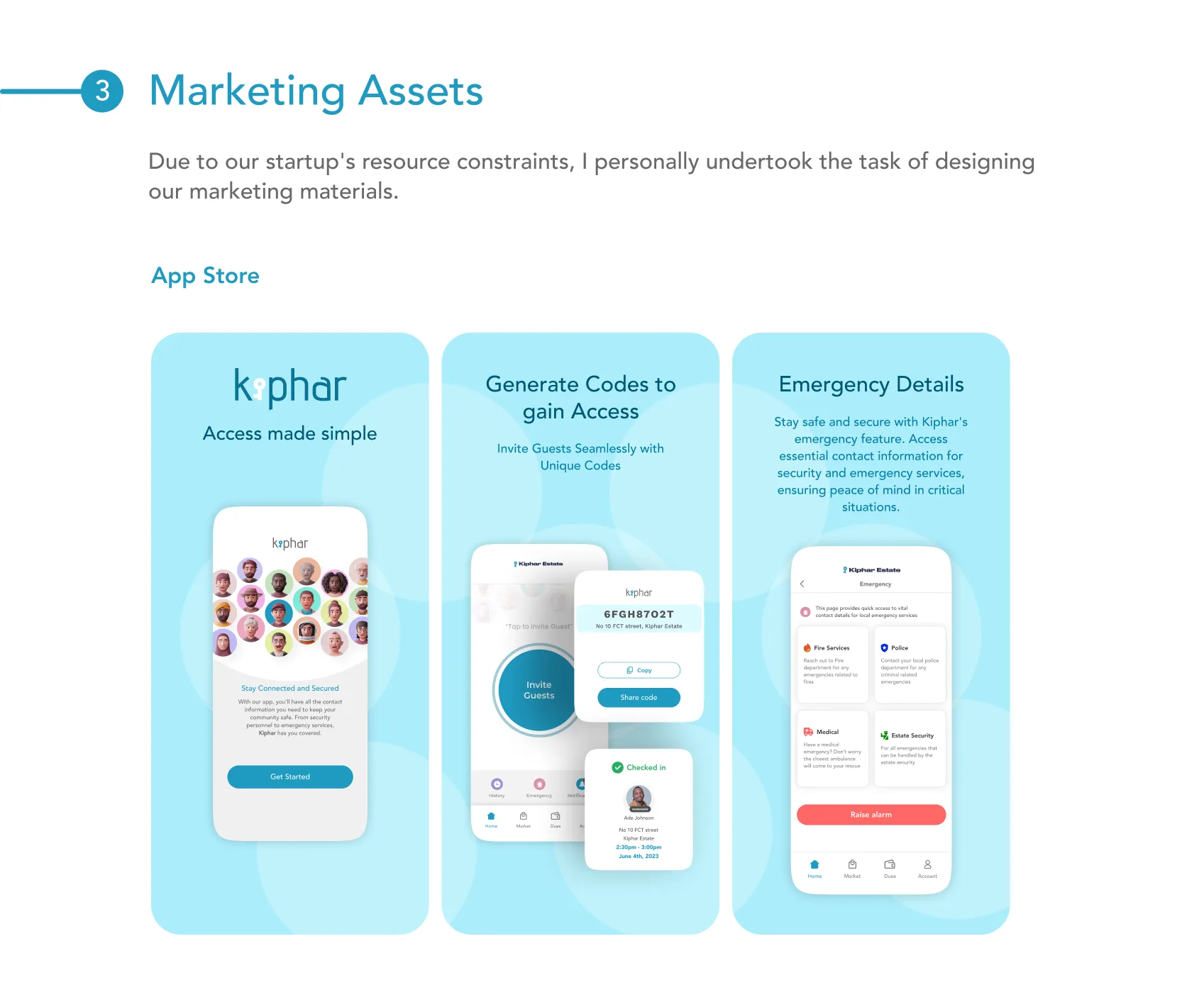
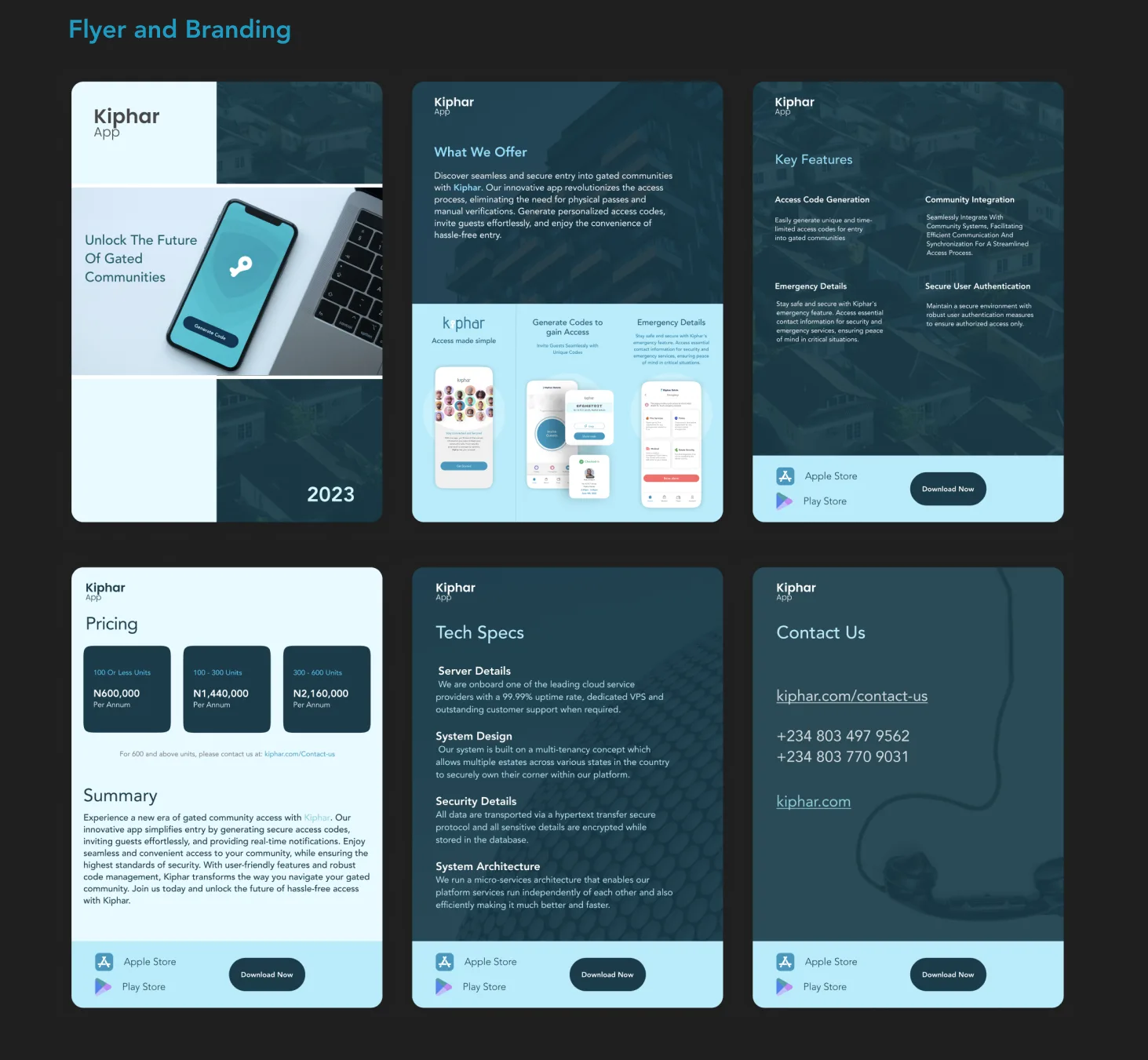
I took on the marketing too: App Store screenshots, flyers, pricing sheets, and brand bits. When you're a founding team of two, “full stack” means a lot more than code.
( Outcomes )
2
Gated communities live on the platform
2
Apps shipped, resident and security
0→1
Founded, designed, and built
( Next project )